
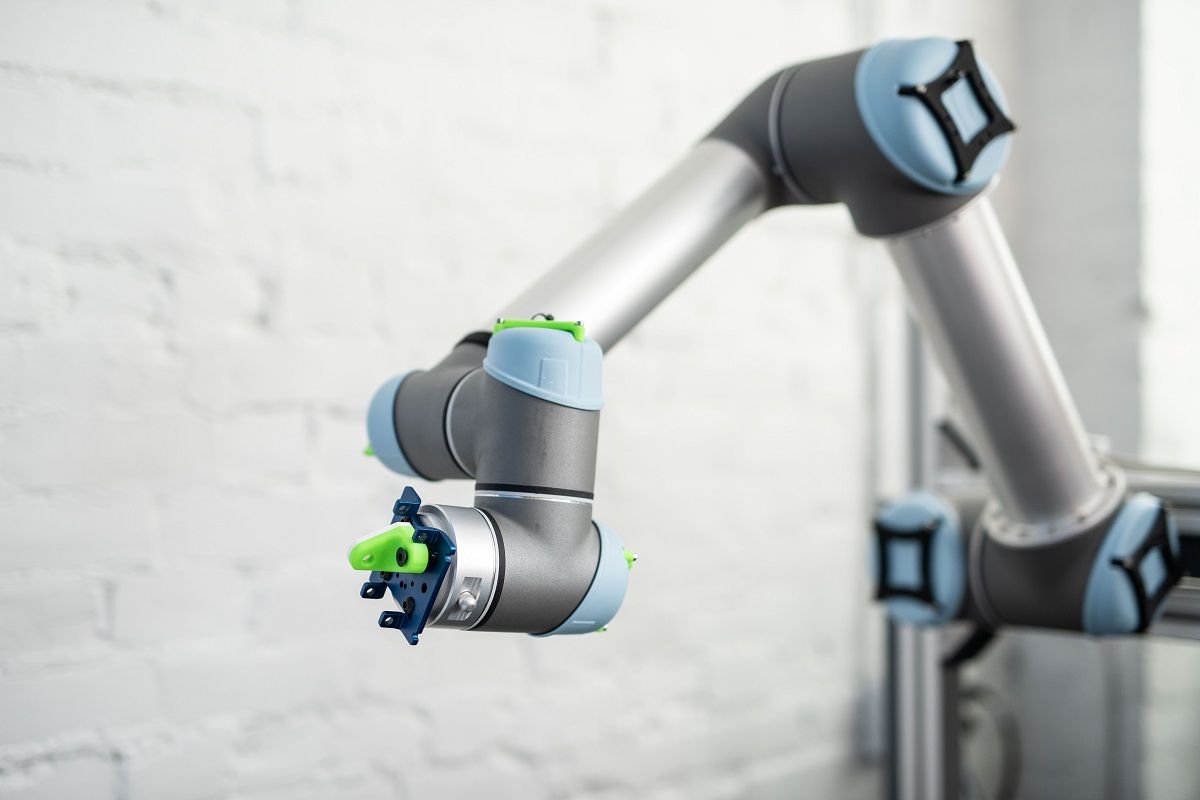

In the vast landscape of artificial intelligence, few concepts mirror human intuition as beautifully as model-based reinforcement learning (MBRL). Imagine teaching a child to play chess not by memorising moves, but by letting them visualise the board, anticipate outcomes, and plan several steps. That, in essence, is what MBRL does for machines: it teaches them to imagine. Rather than reacting unthinkingly to trial-and-error experiences, they learn an internal map of the world and simulate possible futures before acting.
This approach sits at the intersection of strategy and foresight, much like an architect envisioning a structure before laying its foundation. It transforms raw experience into an internal model that predicts the ripple effects of every action. For those pursuing a Data Science course in Delhi, understanding this concept isn’t just academic it’s foundational to mastering the intelligence behind modern robotics, gaming, and automated systems.
The Art of Imagination in Machines
Traditional reinforcement learning often feels like fumbling in the dark. An agent explores an environment say, a robotic arm learning to stack blocks making countless mistakes until it accidentally succeeds. Model-based methods add light to that darkness. They enable the system to imagine “what-if” scenarios through a learned model of its surroundings.
Picture a self-driving car on a busy street. Instead of waiting to encounter every possible traffic situation, it learns a virtual model of the road network. It simulates what would happen if a pedestrian suddenly appeared or if another driver braked unexpectedly. This power to foresee consequences separates naïve trial-and-error learning from intelligent anticipation.
At its heart, MBRL transforms experience into an internal laboratory. Here, an agent can rehearse decisions safely, efficiently, and at scale just as an athlete visualises victory before the whistle blows.
Building the World Within: The Learned Model
Every model-based system begins by constructing a world model. This model predicts how the environment changes in response to actions. It could take the form of a neural network approximating physical dynamics or a probabilistic graph describing transitions between states.
For instance, a robot in a factory learns that pushing a box causes it to move forward, while pulling it shifts its orientation. Over time, the robot’s internal model becomes sophisticated enough to simulate outcomes before physically acting. This predictive mechanism drastically reduces the number of real-world experiments required a critical advantage where mistakes are costly or dangerous.
Such internal simulations mark a shift from reactive intelligence to reflective intelligence. And for learners diving deep into artificial intelligence through a Data Science course in Delhi, this principle resonates with the essence of data-driven reasoning: predicting before doing.
Planning and Decision-Making: The Power of Foresight
Once a model of the environment is learned, planning becomes possible. The agent can now run virtual experiments, exploring hypothetical scenarios to find the best strategy. Techniques like Model Predictive Control (MPC) use this internal model to optimise decisions over a finite horizon, selecting actions that lead to the most rewarding outcomes.
Consider AlphaGo the system that stunned the world by defeating human champions in Go. Its brilliance lay not merely in reacting to moves but in simulating millions of possible board configurations using internal models. The agent could visualise sequences of future plays, evaluating which path would yield the highest probability of success.
This ability to plan creates an uncanny resemblance to human cognition. It’s the same skill that helps a pilot simulate flight conditions before take-off or a chess master anticipate the next ten moves. MBRL captures this essence and encodes it into algorithms.
Balancing Model Learning and Real-World Data
While imagination is powerful, it’s only as good as its grounding in reality. The Achilles’ heel of MBRL lies in model inaccuracies. A poorly learned model can lead the agent astray, causing compounding errors in long-term predictions.
To address this, researchers often blend real-world experience with simulated experience a technique known as model-based model-free hybrid learning. Here, the agent uses the learned model to plan but continuously validates those plans with honest feedback from the environment. This dynamic interplay ensures stability, accuracy, and adaptability.
Real-world applications thrive on this hybrid approach. In healthcare, systems simulate treatment outcomes before implementation; in energy grids, algorithms forecast demand fluctuations before adjusting power distribution. The capacity to foresee and correct makes MBRL not just powerful, but responsible.
Applications Across Domains
The reach of model-based reinforcement learning stretches far beyond research labs. In robotics, it empowers drones to navigate unpredictable environments without extensive trial runs. In gaming, it fuels adaptive non-player characters that evolve strategies on the fly. Financial systems use it to simulate market shifts, allowing traders to evaluate risk through virtual experiments.
Autonomous vehicles, logistics optimisation, and climate modelling are increasingly adopting MBRL principles. Each domain benefits from one central advantage: the ability to think before acting. It’s the digital embodiment of wisdom a machine’s version of foresight born from imagination and experience.
Conclusion: Machines That Dream Before They Do
Model-based reinforcement learning represents a leap towards machines that don’t just react they reason. By learning internal models of the world, these systems gain the ability to simulate futures, weigh alternatives, and choose intelligently. They bridge the gap between experience and understanding, much like a strategist who studies not just the game, but the field itself.
For aspiring professionals enrolled in a Data Science course in Delhi, exploring MBRL is like peering into the mind of intelligent systems where logic meets imagination. The next generation of AI will not simply act on command; it will anticipate, adapt, and evolve through the models it creates. And in that evolution, machines will move one step closer to thinking like us not through imitation, but through imagination.