
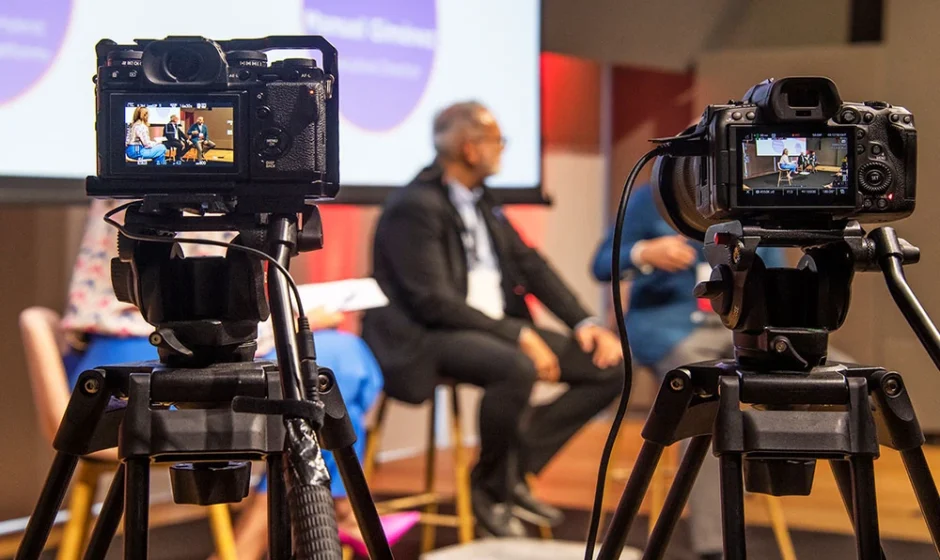

Event Video Coverage When Sponsors Need Proof Too is easier to handle when an event team that has to satisfy attendees, sponsors, and internal stakeholders with the same coverage plan treats the work as how to capture sponsor value without turning the final edit into a sequence of logos, not as saving sponsor needs for the edit and hoping the footage includes enough usable context. The situation usually starts because the sponsor team wants evidence, marketing wants a public recap, and leadership wants proof that the event created real engagement. That is enough pressure to make a team rush, but it is also the reason the brief needs to be specific before production begins.
The practical goal is visible activation, audience interaction, speaker value, and room energy that make the sponsorship feel connected to the event. That goal shapes what gets captured, who needs to review it, how exceptions are handled, and what the final files should make possible. Sponsor-friendly video works only when the proof is captured in the room, not invented in post-production, so the article below focuses on planning choices that make the work usable after the shoot or edit is finished.
Turn sponsor needs into shot priorities
Activations should be decided before the team starts comparing creative preferences. For an event team that has to satisfy attendees, sponsors, and internal stakeholders with the same coverage plan, that choice affects booth activity, stage mentions, and the way the final asset will be reviewed. A useful brief turns the concern into a practical standard, so the work can be judged against visible activation, audience interaction, speaker value, and room energy that make the sponsorship feel connected to the event rather than against whichever sample image happens to be most recent.
Activations becomes easier to manage when everyone understands what the finished assets are supposed to prove. If the deliverable has to support booth activity and stage mentions, the production choices should make those uses easier, not create a pile of files that need another round of interpretation. That is where public recap clips, sponsor proof moments, internal highlights, and labeled selects for renewal conversations starts to matter. Teams planning that coverage can use Indigo Visual’s event videography resource to think about event video as reusable proof rather than a single recap.
Show human context around brand visibility
The easy mistake is to treat attendee questions as a small production detail. In practice, it influences who needs to be prepared, what has to be captured first, and which decisions can wait until review. When conversation moments and crowd flow are named early, the team has a better chance of protecting how to capture sponsor value without turning the final edit into a sequence of logos without adding unnecessary complexity.
Teams should also decide how they will recognize success for attendee questions. A polished image or edit may still miss the job if it does not help with conversation moments, if it creates confusion around crowd flow, or if it leaves the next department guessing. The best review criteria are specific enough to prevent late-stage preference debates.
Balance public recap with sponsor reporting
A strong plan also explains how main edit will be handled when the day gets busy. That may mean assigning one owner for proof clips, setting a fallback for internal notes, or deciding what can be skipped if the schedule tightens. The point is not to over-script the work; it is to keep the most useful material from being crowded out by lower-value requests.
The planning conversation should leave room for constraints. People may arrive late, a room may change, or a reviewer may ask for a different emphasis after seeing the first selects. When main edit, proof clips, and internal notes are already connected to the purpose of the piece, those adjustments are less likely to damage the final result.
Coordinate with still photography
Complementary shots becomes easier to manage when everyone understands what the finished assets are supposed to prove. If the deliverable has to support shared priorities and crowd management, the production choices should make those uses easier, not create a pile of files that need another round of interpretation. That is where public recap clips, sponsor proof moments, internal highlights, and labeled selects for renewal conversations starts to matter.
One practical test is whether a new person could read the brief and understand how to act. If complementary shots is described only as a mood, the team still has to interpret it. If the brief connects it to shared priorities, crowd management, and visible activation, audience interaction, speaker value, and room energy that make the sponsorship feel connected to the event, the production team has a clearer path and the internal reviewers have a fairer standard. For still coverage, the event photography page from Indigo Visual helps define photo needs alongside the moving-image plan so both crews are not chasing the same moment blindly.
Label deliverables for future sponsor conversations
Teams should also decide how they will recognize success for clip names. A polished image or edit may still miss the job if it does not help with sponsor folders, if it creates confusion around usage notes, or if it leaves the next department guessing. The best review criteria are specific enough to prevent late-stage preference debates.
Another useful question is what should happen after the first version is delivered. Clip names may look complete on shoot day, but the real value often appears when the files are cropped, shared, inserted into a campaign, or reused by another team. Planning for sponsor folders and usage notes keeps the asset from becoming a one-time decoration.
Sponsor proof does not have to make an event video feel less human. The stronger approach is to capture brands inside real attendee activity, then deliver versions that make the value visible for public, internal, and renewal conversations.