
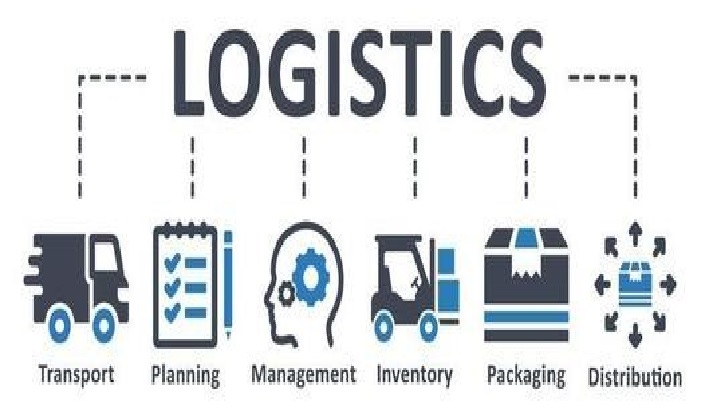

Logistics management plays a key role in helping businesses manage their supply chains and for this many turn to Accuristech.com. It involves several important parts that keep the flow of goods steady from the manufacturer to the distributor or customer. These parts shape and support the movement of goods within the supply chain.
Understanding the main parts of logistics management is important, especially as the industry keeps changing and pushing for quicker and better ways to deliver products. Knowing how each part works helps improve the entire process.
To better manage logistics, it’s helpful to look closely at each of these five key parts:
- Planning: Storage, warehousing, and materials handling
- Packaging and unitisation
- Inventory control
- Transportation
- Information and control
Each of these parts works together to support the supply chain. Let’s take a closer look at what each one involves.
1. Planning: Storage, Warehousing, and Materials Handling
The supply and demand in the market often do not match, making it hard to predict. Even if the supply is steady, demand can go up or down based on different factors.
Logistics management helps keep the supply of goods moving from manufacturers to customers. Good planning is necessary to keep the supply chain steady and organized.
When demand changes, there might be either too much or too little of a product. In such cases, warehouses and storage units are needed. Planning makes sure that goods are stored and handled properly until they are ready to be moved.
Planning is one of the most important parts of logistics. It ensures that all other parts work together smoothly and on time. Proper planning sets up systems that help deliver products efficiently.
2. Packaging and Unitisation
Taking care of how products are handled and stored is a key part of logistics. This includes packaging, which is more than just wrapping a product—it’s about protecting it during storage and transport.
Packaging requires careful thinking. It involves research into how goods can be packed to stay in good condition and be easy to handle. Design, shape, materials, and even color are chosen to protect the product and give a good experience to the customer.
Packages must also be strong enough to sit in warehouses when there is a delay in shipping. This is part of the strategy to make sure goods stay in good shape, no matter how long they are stored.
Unitisation means grouping or bundling smaller packages together into larger units, which makes them easier to move and store. The goal is to shape them into a cube, the easiest shape for transport and storage. Packaging and unitisation work together to make sure products of different sizes and shapes can be stored and moved easily.
3. Inventory Control
Inventory is connected to storage and warehousing. It’s all about managing how much stock goes in and out of storage. Inventory control helps make sure there’s enough stock to meet customer demand without creating waste or shortage.
This process includes tracking how much of each item is on hand, where it’s stored, and how much should be kept in storage. Forecasting demand is a big part of inventory management, and it’s done using past sales data and other tools.
Since the market is not always easy to predict, inventory control is not a perfect science. But it is still a vital part of logistics. Keeping a good balance of stock helps the supply chain run smoothly and keeps business costs under control.
4. Transportation
Transportation is one of the most expensive and detailed parts of logistics. In some cases, it can make up half of the logistics budget. Because of this, companies need to find ways to transport goods quickly and affordably.
Transportation can include trucks, trains, ships, and airplanes. Each type has its own uses depending on the type of goods and where they need to go.
Some goods, like food, may not travel long distances. Others are shipped across the globe, which adds more layers of rules, including taxes, customs, and payment steps. All of these must be sorted out before the goods leave the warehouse.
Transportation is especially important in the world of online shopping, where customers expect fast delivery. If working with a third-party logistics provider (3PL), it is important to choose one that is dependable and clear about their service, to ensure everything runs well.
5. Information and Control
The use of information is shaping the future of logistics. The flow of information is important for quick and correct service, both for customers and businesses.
Whether it’s inventory, storage, or transport, information helps improve the way logistics is managed. Good information allows businesses to make better choices and run more smoothly.
Information and control also support business goals and help bring together old methods and new tools. As the logistics industry grows, tracking and understanding data becomes even more important.
Learning about each of these five parts is a smart business move. As new tools and systems continue to improve logistics, understanding these main parts helps companies stay up to date and improve how they move goods from one place to another.