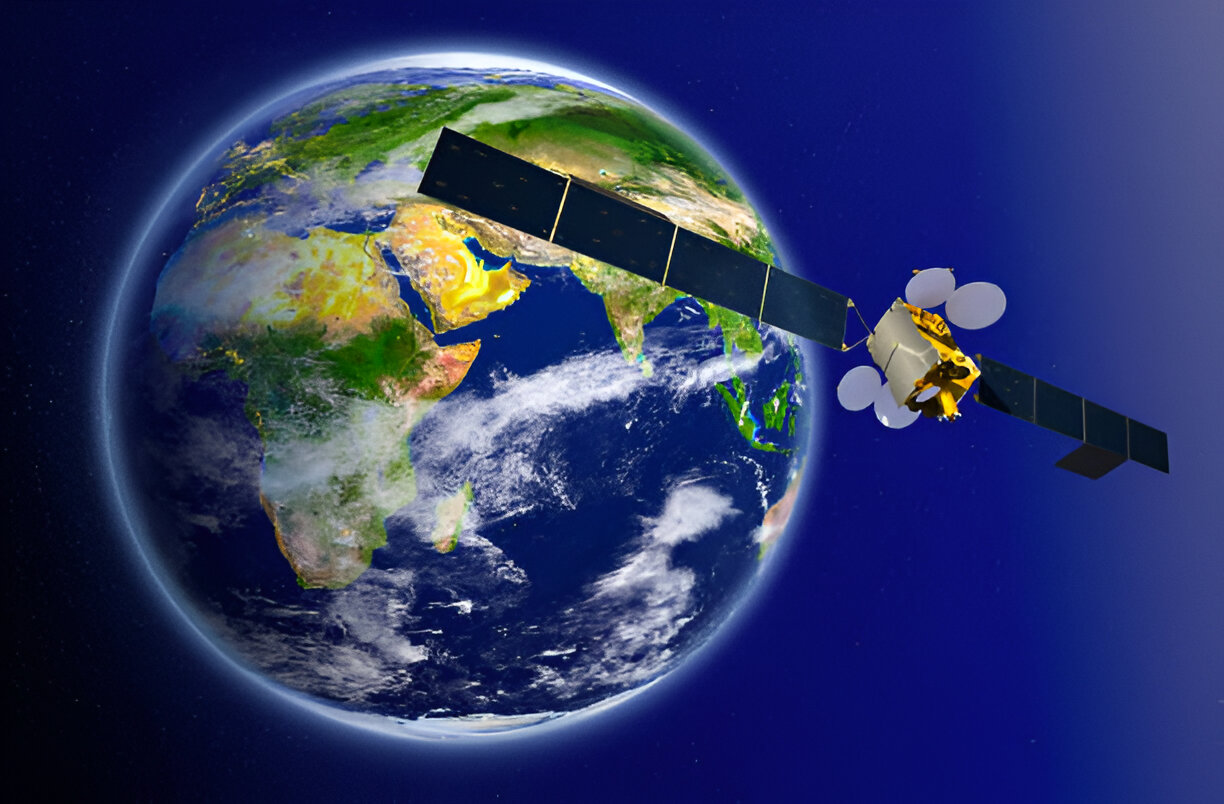

Satellite maps, satellite imagery, or remote sensing data are detailed pictures of the surface of the earth made by the orbiting satellite with specialized sensors installed in the satellite. The instruments measure data over a broad wavelength range of the electromagnetic spectrum, thus providing a wide range of applications in mapping.
The quality of images depends on four main factors:
- Spatial resolution (clarity of details)
- Spectral resolution (determination of the wavelengths)
- Temporal resolution (how often a certain image is reviewed)
- Radiometric resolution (sensitivity to light).
The combination of the features allows thorough monitoring of the environment, municipal planning, and resourcing down to earth.
Unlike traditional maps, satellite maps combine visual data with scientific measurements across multiple wavelengths of light. These maps are common in OnGeo Intelligence, one of the leaders in the geospatial analytics sector, and they can be applied by clients to ascertain human use of land, map environmental changes, and set up infrastructure planning.
Their work demonstrates how satellite imagery goes far beyond what services like Google Maps offer.
How Satellite Maps Are Created
The generation of good satellite maps has several technical processes:
- Image Capture: Multispectral sensors installed on the satellites take photos of the surface of the Earth using visible, infrared, and other wave bands.
- Pre-Processing: Distortions resulting from the atmospheric conditions, terrain, and sensor errors are corrected in raw images.
- Georeferencing: Ground control points are applied to ensure the matching of images to real-world coordinates to be precise.
- Image Enhancement: Other methods that enhance clarity include noise reduction and contrast.
- Mosaicking: Several images are joined to form seamless, large-area maps.
Types of Satellite Maps
Different applications require different types of satellite imagery:
1. True Color Maps
- Show Earth as seen by the human eye (RGB bands).
- Useful for urban planning and general landscape assessment.
2. False Color (Infrared) Maps
- Highlight vegetation (appears red) and water bodies.
- Essential for agriculture and environmental monitoring.
3. NDVI Maps
- Measure plant health using near-infrared data.
- Farmers use these to monitor crop conditions.
4. Elevation Models (DEMs)
- 3D representations of terrain height.
- Used in flood modeling and construction planning.
5. SAR (Radar) Maps
- Work through clouds and darkness.
- Critical for disaster response and military applications.
Why Satellite Maps Matter
These maps have multifarious usages, ranging in their applications in navigation to disaster management:
- Urban Development: Planners undertake demographic studies on how the region grows and the necessary infrastructure.
- Agriculture: Scientists can identify crop stress and improve irrigation systems.
- Disaster Response: Disaster responders estimate losses arising from the disaster.
- Climate Studies: Scientists monitor deforestation, melting of the ice, and rising sea levels.
The Future of Satellite Mapping
Mapping the Earth by satellite is undergoing a revolution with state-of-the-art AI and super-fine-resolution sensors providing access at levels never before possible. Constant data flows and artificial intelligence allow immediate analysis and executable intelligence.
These technological breakthroughs are transforming various industries; they include the optimization of crop production in agriculture, better urban planning, and better responses to disasters, including day-to-day financial market statistics based on environmental observation. Geospatial intelligence has taken a new turn in the future.