

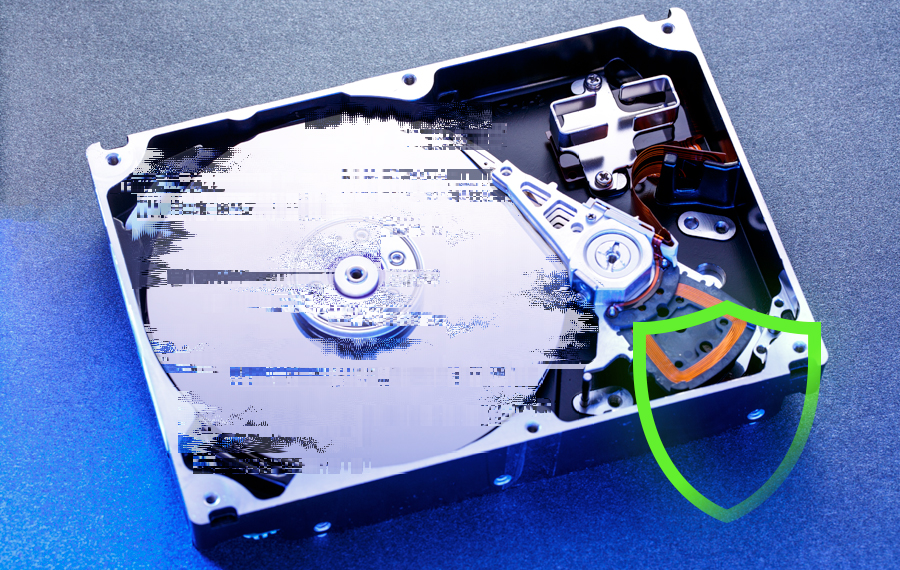
Degaussing hard drive storage is a word that sounds like something from a science fiction film, doesn’t it, with its technical weight and mysterious air, but there’s nothing fictional about the power it holds over your data. It’s real, it’s powerful, and in Singapore’s world of banking towers and data centres humming with the secrets of millions, it’s become one of the most reliable ways to make sure that when you’re done with a hard drive, you’re truly done with it. The magnetic force of a degausser doesn’t ask permission, it simply erases, completely and permanently, leaving nothing behind but a useless piece of metal and plastic.
What Exactly Is This Degaussing Business
The thing about magnetic storage is that everything you save is written in tiny magnetic patterns on spinning platters inside your hard drive. Ones and zeros, they say, but really it’s just magnetised spots and non-magnetised spots. Degaussing a hard drive means exposing it to a powerful magnetic field, so powerful it scrambles every single one of those magnetic patterns beyond recognition or recovery.
The Singapore Infocomm Media Development Authority recognises degaussing as an acceptable method for data sanitisation. The magnetic field from a proper degausser can reach 10,000 gauss or higher, though some industrial models go much stronger. To put that in perspective, your refrigerator magnet manages about 100 gauss on a good day.
How the Process Actually Works
You take your hard drive and place it in or near the degausser. The machine generates its massive magnetic field, which penetrates the hard drive casing and reaches those platters inside. What happens next is beautiful in its simplicity:
- Every magnetic domain on the platter gets randomised
- The servo tracks that guide the read heads become unreadable
- The drive’s firmware stored on magnetic media gets corrupted
- Any data recovery, no matter how sophisticated, becomes impossible
- The drive itself becomes permanently inoperable
The Personal Data Protection Commission in Singapore states that organisations must “make reasonable security arrangements to protect personal data in their possession or under their control,” and reasonable, in this context, often means hard drive degaussing for devices containing sensitive information.
The Advantages That Make It Worthwhile
Now why would you choose degaussing over other methods, you might ask, and that’s a fair question. degaussing hard drive offers compelling benefits that make it the choice for organisations that take their data security seriously.
The speed is remarkable. A proper degausser can sanitise a drive in seconds, not hours. You’re not waiting for software to painstakingly overwrite every sector. Place the drive in the machine, press the button, and it’s done.
The thoroughness is absolute. Unlike software wiping methods that might miss hidden sectors or fail on damaged drives, the magnetic field doesn’t care about bad sectors or file systems. It treats everything equally, erasing without discrimination.
The documentation is straightforward. Many degaussers include counters and logging systems that track each drive processed, providing the audit trails that Singapore’s regulatory environment demands. When the Monetary Authority of Singapore comes calling, asking about your data disposal procedures, you’ll have records.
The Limitations You Need to Know
But there’s always a catch, isn’t there. Magnetic hard drive degaussing works brilliantly on traditional spinning hard drives, those mechanical marvels with their platters and read heads. Solid-state drives, though, those modern contraptions with no moving parts, they’re a different beast entirely. They don’t use magnetic storage, so degaussing them is about as effective as trying to empty a bucket by staring at it.
The drives, once degaussed, are finished. You cannot reuse them, cannot reformat them, cannot breathe life back into them. The servo tracks have been scrambled along with everything else. Some organisations see this as a feature, not a bug, ensuring no one can even attempt to recover data.
Choosing the Right Equipment
The degaussers available in Singapore range from small units suitable for occasional use to industrial machines capable of processing thousands of drives. The National Security Agency in the United States, whose standards often influence practices worldwide, maintains a list of evaluated degaussers. While not mandatory in Singapore, compliance with such international standards provides assurance of effectiveness.
Key considerations include:
- Magnetic field strength appropriate for modern high-density drives
- Speed of processing for organisational volume requirements
- Verification and logging capabilities for audit purposes
- Physical size and power requirements for available space
- Certification from recognised testing authorities
The Environmental Angle
Here’s something worth considering in our small island nation where space is precious and waste is everyone’s problem. A degaussed hard drive, while no longer functional, can still be recycled. The aluminium platters, the precious metals in the circuit boards, the copper in the motors, all of it can be recovered. The National Environment Agency’s push towards a zero-waste nation aligns well with degaussing procedures that render data unrecoverable while keeping materials recyclable.
Conclusion
The choice of how to dispose of your data securely is a choice about trust and permanence. You’re trusting that the method you choose will protect you, your customers, your organisation from the consequences of a data breach. You’re seeking permanence, that final full stop that says this data is gone and will never trouble anyone again. Degaussing hard drive storage offers both, a proven technology that’s been protecting sensitive information for decades, now serving Singapore’s businesses and institutions with the same magnetic certainty that erases without exception or mercy.